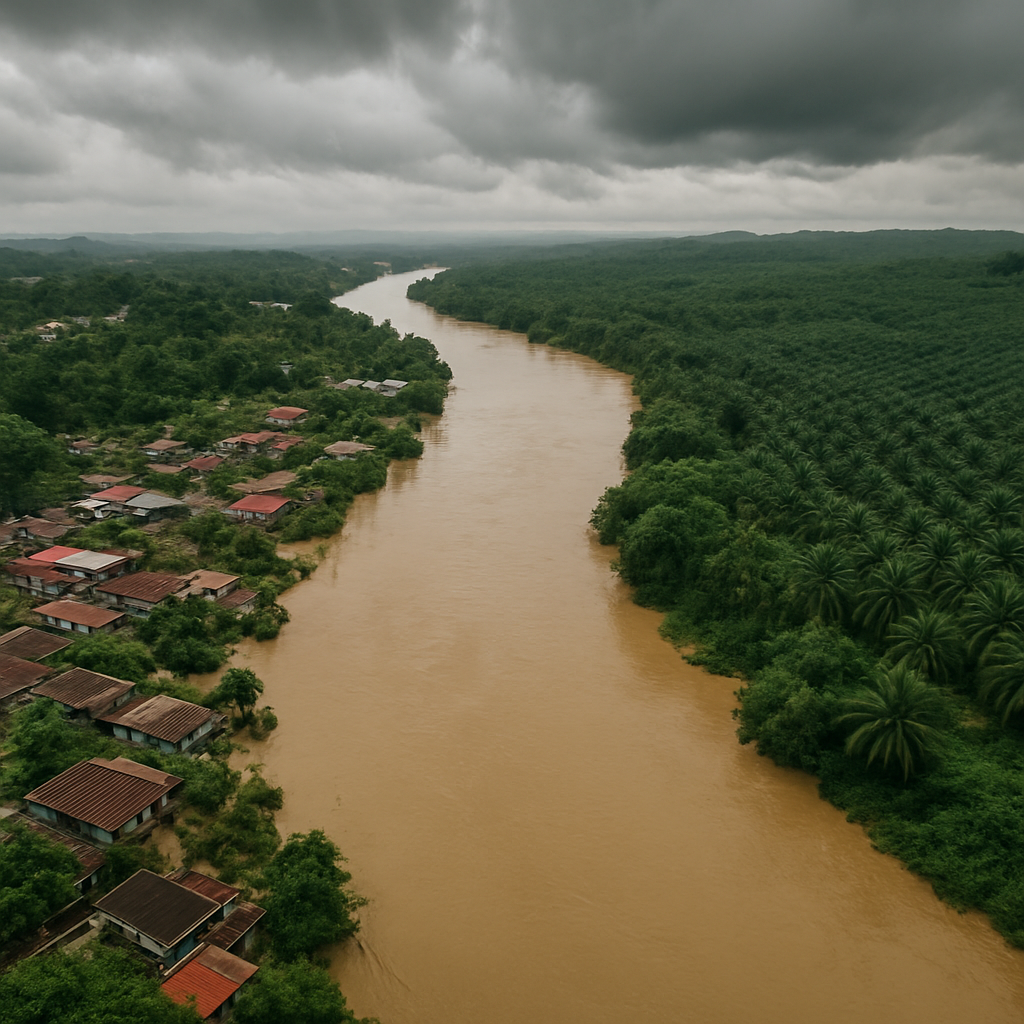

Every river can only absorb so much pollution before its water quality is compromised. Total Maximum Daily Load (TMDL) and assimilative capacity are the science-based tools that quantify that limit — and they are becoming central to how regulators license discharges and protect water resources.
What is assimilative capacity?
Assimilative capacity is the amount of a pollutant a river can receive and still meet its water quality standards. It is not fixed — it changes with flow, temperature, season and the cumulative loads already entering the system upstream.
Understanding this capacity is the foundation of fair, evidence-based pollution control: it defines how much load the environment can safely absorb before intervention is required.
What is a Total Maximum Daily Load (TMDL)?
A TMDL is the maximum amount of a pollutant that can enter a water body each day while still meeting water quality standards. It allocates that allowable load between the various sources discharging into the river — from industrial outfalls to diffuse runoff.
Done well, a TMDL turns an abstract water quality goal into concrete, enforceable limits that planners and regulators can act on.
Strategies for effective pollution control
- Build a basin-wide picture of pollution sources and hydrological pathways before setting limits.
- Quantify cumulative loads and hotspots rather than assessing discharges in isolation.
- Use scenario analysis to test how new discharges or interventions affect compliance.
- Make load allocation transparent so stakeholders understand and trust the outcome.
How H2O Datatech supports TMDL with AI
Our Airnomik© platform automates pollution load allocation, hotspot analysis and assimilative capacity modelling across the whole basin, with AI-driven risk screening and compliance monitoring.
For Sarawak's largest river system, this delivered a defensible, data-driven TMDL framework that accelerated licensing efficiency and strengthened stakeholder accountability.
Key takeaways
- Assimilative capacity defines how much pollution a river can absorb — and it changes with conditions.
- A TMDL converts water quality goals into enforceable, allocated daily limits.
- AI-driven load allocation in Airnomik© makes pollution control transparent and defensible.